18/06/2025
In the real estate sector, the terms "primary real estate" and "secondary real estate" are often mentioned. These are important concepts that significantly affect the investment decisions of investors and buyers. However, not everyone is fully aware of the difference between these two types of real estate, especially when the Thu Thiem market in Ho Chi Minh City is rapidly developing. In the article below, Achieve Realty VN will provide a detailed analysis of primary and secondary real estate, giving customers a clearer and more accurate overview before making an investment decision in the real estate market!
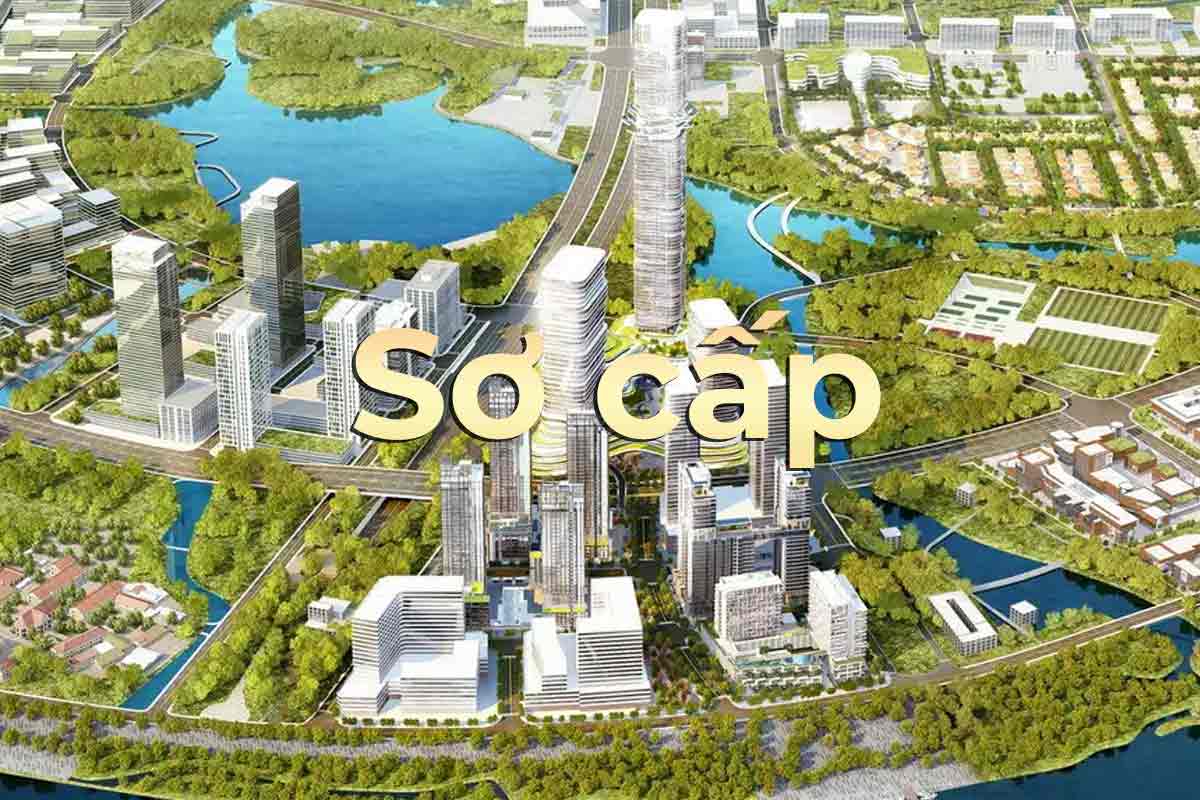
Primary real estate (also known as new real estate, not previously owned) refers to real estate projects that are being sold for the first time by investors or project developers. The characteristic of primary real estate is that these products have never been used, bought, sold, or transferred between other parties. Typically, primary real estate can include apartments, townhouses, villas, residential areas, or newly built commercial complexes. Primary real estate can also include products that are only in the early stages of development, lacking completed infrastructure, design, or internal amenities. These products may be in the early construction phase or have completed the basic structure but have not finished additional steps like installing interiors, completing exteriors, or adding amenities like swimming pools, parks, or roads.
As such, primary real estate often has more attractive prices compared to fully completed products, and buyers can participate in the process of choosing or modifying certain design elements of apartments or townhouses. However, investors also need to carefully consider the construction progress, the potential for completion, and the legal factors of the project before making a purchase decision.
Direct sale from the developer: When purchasing primary real estate, customers usually buy directly from the developer or the official distribution units of the project.
Unused products: These are completely new products that have never been owned by anyone else.
High potential for price increase: Since it’s a new project, purchasing primary real estate can sometimes lead to high price appreciation, especially when the surrounding infrastructure is further developed.
Flexibility in design and selection: Primary real estate projects often allow buyers a variety of choices in terms of apartments, sizes, designs, and accompanying amenities.
Secondary real estate refers to real estate products that have been bought and sold by one or more previous owners and are now being resold on the market. These can be used apartments, townhouses that have been built and inhabited, or commercial properties that have changed hands multiple times. Typically, secondary real estate may have increased in value due to factors like location, surrounding amenities, or area development.
High liquidity: Due to being owned by multiple parties, secondary real estate is usually easier to buy and sell and can be transferred immediately.
Stable price increase potential: While secondary real estate doesn't usually experience the same level of price increases as primary real estate, it tends to be more stable and less risky for investors.
Already inhabited: For secondary real estate, buyers can directly visit the property to assess its condition, helping them clearly evaluate the quality and living environment.
Possible price depreciation: If the property hasn’t been well maintained or is damaged, the value of secondary real estate may decrease, which can affect the investment decision.
According to the perspective and evaluation of experts with over 10 years of experience at Achieve Realty VN, choosing to invest in primary or secondary real estate both have their own advantages and risks, depending on the goals, needs, and strategies of each investor. Each type of real estate has distinct characteristics, suitable for different groups of customers. To make the right investment decision, it’s essential to understand the differences and features of both markets.
Opportunities:
Strong potential for price increases: Primary real estate often has a lower selling price compared to used products, and with the strong development of surrounding infrastructure, the value of the product can increase quickly. This is a factor that attracts investors, especially in rapidly developing areas like Thu Thiem, Ho Chi Minh City.
Promotional policies from developers: Developers often offer promotional programs like discounted prices during the initial stages, financial support, or service packages (such as free maintenance or interior decoration), helping to reduce the initial investment cost for buyers.
New and customizable products: Primary real estate often gives buyers the opportunity to choose designs, sizes, and amenities according to their needs. This not only increases customer satisfaction but also creates long-term value in upgrading and improving living spaces.
Challenges:
Risk regarding progress and construction quality: Primary real estate projects, especially new ones, cannot be immediately completed, and investors may have to wait a long time until delivery. This poses risks related to delays or construction quality not meeting the agreed-upon standards.
Uncertainty about area development: Although new areas are strongly invested in infrastructure, development speed may not always match expectations. If infrastructure or other projects are not completed on time, the real estate value may not increase as anticipated.
Value gap between stages: Primary real estate often starts with a lower price but can increase significantly as the area develops. However, the value gap may not be uniform across projects and can depend on factors like construction quality, location, and surrounding elements.
Reviewing the price increase potential of primary real estate in Thu Thiem:
Metropole Thu Thiem: The Metropole Thu Thiem project, developed by large investors in the Thu Thiem area, clearly demonstrates the strong price appreciation potential of primary real estate. When Metropole Thu Thiem was first sold, the prices of apartments here were quite reasonable and accessible for many investors. However, as surrounding infrastructure such as highways, the Thu Thiem 1 and 2 bridges, and other public works were completed, the project’s value significantly increased. According to Achieve Realty VN’s report, within 2-3 years from the initial sale, apartment prices at Metropole increased by 30-40%, resulting in substantial profits for investors.
Empire City: Similarly, the Empire City project in Thu Thiem saw significant price increases from the time it was first launched. When it was introduced, the prices of apartments at Empire City were very competitive. However, after the area’s transportation infrastructure, particularly the completion of Metro Line 1, the property’s value rose dramatically. According to evaluations from Achieve Realty VN, apartment prices at Empire City increased by 25%-30% during construction, and this price growth continued after the project was completed and delivered.
Benefits:
High liquidity: One of the major advantages of secondary real estate is its high liquidity. Since these products have been used and their value is validated through multiple transactions, buyers can easily determine the real value of the property, making buying and selling faster.
Already inhabited, easy to assess quality: Buyers can visit the property directly to inspect its condition, allowing them to easily assess construction quality, living conditions, and other factors like surrounding infrastructure.
Lower legal risks: Secondary real estate, having been transferred multiple times, typically has clear and easily verifiable legal documents. This reduces legal risks, which may sometimes occur with incomplete or still-in-the-approval process primary properties.
Challenges:
Lower price increase potential: Although secondary real estate is more stable, it typically does not experience the significant price increases seen in primary real estate. When purchasing secondary real estate, the product's value is already stabilized, and price increases will be slower, depending on factors like renovation, repairs, and market demand.
Maintenance and repair costs: Some secondary real estate properties may have been used for a long time and may require maintenance or repairs. This could reduce the initial investment value and incur additional costs for the buyer. The need to invest further in renovation may affect the investor’s profits.
Deterioration: Secondary real estate may suffer from deterioration due to long-term use. Apartments or townhouses not well maintained may lose their original value, and buyers may face repair and maintenance costs to restore them.
Choosing whether to invest in primary or secondary real estate depends on the investor's goals, needs, and risk tolerance. Primary real estate offers strong price increase potential due to surrounding infrastructure development but also carries risks related to construction progress and quality. Secondary real estate offers more stability with better liquidity and lower legal risks but lacks the significant price increase potential. Both types have their pros and cons, and to make a sound investment decision, investors need to carefully consider factors such as location, price appreciation potential, legal status, and maintenance or repair costs.