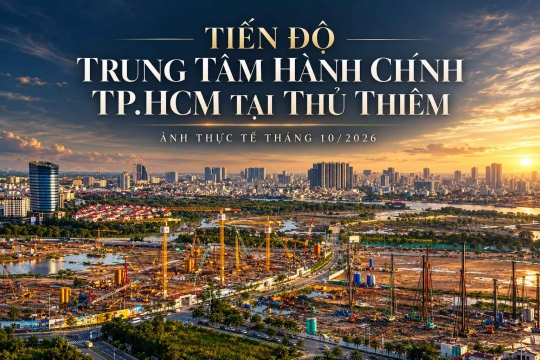
15/05/2025
Ho Chi Minh City is accelerating the development of key transportation infrastructure to enhance connectivity with Long Thanh Airport — a national strategic project. Among these, the Thu Thiem – Long Thanh urban railway line, with an estimated investment of approximately $3.5 billion, is a focal project currently being prepared by the Ministry of Construction for investment approval, expected to be submitted to the National Assembly by October 2025.
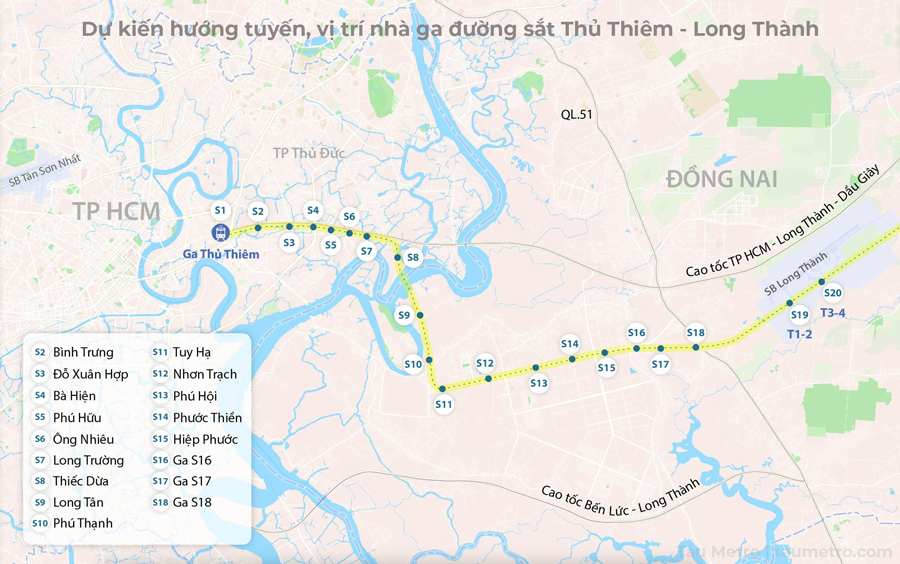
According to Ho Chi Minh City’s transportation plan, three main urban railway lines will serve the two major airports: Metro Line 2, Metro Line 6, and the Thu Thiem – Long Thanh railway line. Metro Line 2 connects Tan Son Nhat Airport to Thu Thiem station, while the Thu Thiem – Long Thanh railway extends from Thu Thiem station (located in Thu Duc City) to Long Thanh International Airport in Dong Nai province, covering nearly 42 kilometers.
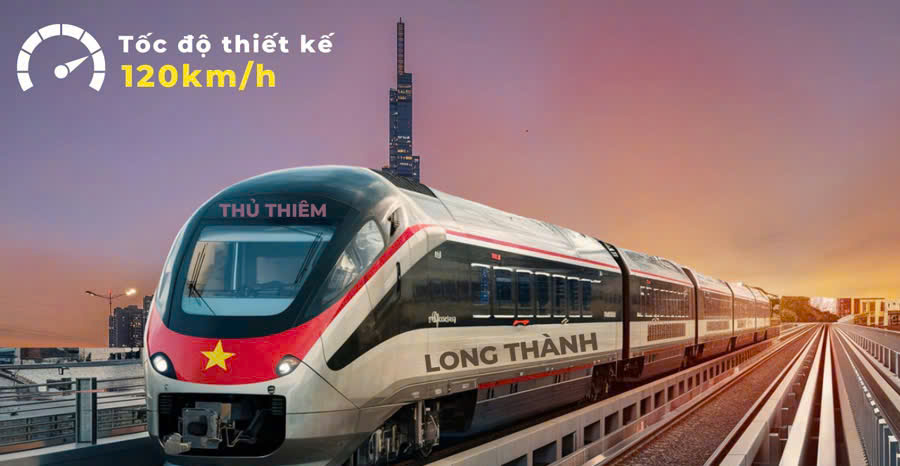
Recently, at its 27th session, the Dong Nai Provincial People’s Council agreed to assign Ho Chi Minh City People's Committee as the project’s managing authority to expedite progress and ensure synchronization in construction, operation, and management phases. This assignment reflects close coordination between the two localities to develop the key gateway infrastructure in the eastern corridor of Ho Chi Minh City.
The Thu Thiem – Long Thanh railway is designed as a double-track line with 20 stations, including 12 stations in Dong Nai province (8 elevated and 4 underground) and 8 stations within Ho Chi Minh City. These stations are strategically located in important districts such as Nhon Trach and Long Thanh to form an efficient network that serves both inner-city and suburban passengers, alleviating traffic pressure on existing roadways.
Upon completion, the railway will significantly reduce travel time from downtown Ho Chi Minh City to Long Thanh Airport to approximately 20 minutes. It is seen as an optimal solution to ease congestion and traffic accidents on the Ho Chi Minh City – Long Thanh – Dau Giay expressway, which currently faces heavy traffic loads.
The project’s impact extends beyond transportation improvements. It is expected to boost regional economic growth, attract investments, and accelerate the development of tourism and logistics services. In particular, the real estate market in the vicinity of the railway is witnessing proactive moves to capitalize on future infrastructure upgrades.
Several real estate projects in Thu Duc City, Nhon Trach, and Long Thanh have intensified promotional activities and launched sales events to attract buyers ahead of the railway’s investment. For instance, FIATO Airport City by Thang Long Real Group, located on Ton Duc Thang Street (Road 25B) and only 10 minutes from Long Thanh Airport, has recently opened its model apartments and organized weekend mini-events to welcome visitors. Similarly, the nearly 40-hectare SpringVille project in Nhon Trach is preparing to enter the market, leveraging local infrastructure developments as a key selling point.
Additional infrastructure enhancements such as the imminent opening of Nhon Trach Bridge and the expansion of the Ho Chi Minh City – Long Thanh – Dau Giay expressway to 10 lanes also contribute to increasing property values in the region, fostering the emergence of modern urban areas and multifunctional commercial hubs near the airport.
Experts assess that the Thu Thiem – Long Thanh railway line plays a pivotal role in the national transportation infrastructure strategy, enhancing residents’ quality of life and promoting socioeconomic development across the region. Building a synchronized urban railway network connecting central areas with satellite cities will create a multi-modal transportation ecosystem that reduces pressure on existing traffic systems and mitigates environmental pollution.
Dr. Vo Kim Cuong, former Deputy Chief Architect of Ho Chi Minh City, highlights that the effective integration and exploitation of metro lines like Thu Thiem – Long Thanh will create a powerful impetus for the development of the expanded metropolitan area. This is not merely an aviation connectivity solution but a comprehensive transportation infrastructure strategy for the greater Ho Chi Minh City region. He emphasizes that project implementation requires thorough planning within an overall transportation framework to ensure feasibility and long-term effectiveness.
Mr. Khuong Van Muoi, former Chairman of the Ho Chi Minh City Architects Association, also stresses the urgent need to accelerate the railway project’s progress to ensure effective connections among modern transportation hubs such as bus stations, waterways, and Long Thanh Airport. According to him, the metro system should not stop at a single line but develop into a strategic network that links the entire Ho Chi Minh City area with its satellite cities, improving sustainable mobility and trade capacity.
In the context of Long Thanh Airport’s imminent operation, completing modern transportation connections like the Thu Thiem – Long Thanh urban railway is crucial for the success and sustainable development of the entire Southeast region.