16/05/2024
Vietnam, a populous country with a young and educated population, is witnessing significant economic growth following reforms that began in 1986. With over 50% of the population under the age of 25 and 90% literacy, Vietnam not only has a vast labor force but also a large consumer market. The following article will explore in detail Vietnam's economic potential, strategic geographic location, abundant natural resources, and efforts to integrate into the global economy, opening up investment opportunities for the world.
Abundant and quality labor force
Vietnam, with a population of 90.73 million people (ranking 13th globally), is expected to reach 100 million people by 2020, with an annual growth rate of about 1.2%. Over 50% of the population falls within the age range of 25 and below. With a young workforce, high educational attainment, and a proactive work ethic, over 90% of the population is literate, and Vietnamese workers are trained with high academic qualifications to meet the demands of industries requiring advanced skills such as information technology, pharmaceuticals, and financial services, at competitive costs compared to other countries in the region.
The unemployment rate among the labor force in the first half of 2020 was 2.26%, with rates in urban areas at 3.62% and rural areas at 1.59% (compared to 1.99% in 2019).
Vietnam's population is diverse, with 54 ethnic groups, including 88% of the Kinh majority and 12% belonging to minority groups such as Tay, Thai, Chinese, Khmer, Hmong, and others. The government has prioritized the development of a quality education and training system.
Vietnamese is the official language, written using the Latin alphabet, reflecting a blend of spoken Vietnamese and Latin characters. While English is becoming increasingly common as a second language, other languages such as French, Russian, Chinese, Khmer, and mountainous languages (such as Mon-Khmer and Malayo-Polynesian) are also used to a lesser extent in Vietnam.

Economic potential
Vietnam's economic strength has significantly developed over the past 30 years. Economic and political reforms since the Renovation (Đổi mới) began in 1986 have driven strong economic growth, transforming the country from one of the world's poorest nations into a middle-income country. From 2002 to 2018, GDP per capita increased by 2.7 times, reaching over $2,700 in 2019, and over 45 million people have escaped poverty. The poverty rate has decreased significantly from over 70% to below 6% (equivalent to $3.2 USD/day). The majority of the remaining poor in Vietnam - 86% - are ethnic minorities.
In 2019, Vietnam's economy continued to demonstrate fundamental strength and resilience, driven by strong domestic demand and export-oriented manufacturing. Actual GDP growth was estimated to be around 7% compared to 2018, marking one of the fastest growth rates in the region. Despite significant health impacts from the COVID-19 pandemic, Vietnam's economy has shown considerable resilience. Although health impacts from the outbreak were not as severe in Vietnam as in other countries due to proactive measures at both national and local levels, economic challenges remain. Macroeconomic and fiscal policies remain stable, with GDP growth estimated at 1.8% in the first half of 2020, projected to reach 2.8% for the entire year. While this year's growth rate is significantly lower than pre-crisis forecasts, Vietnam is one of the few countries in the world not forecasted to experience a recession. However, predicting the impact in terms of magnitude and duration of the COVID-19 crisis remains a challenge for policymakers and planners. Public finance requirements are expected to increase due to reduced revenue and higher spending, as a stimulus package is implemented to mitigate the pandemic's negative effects on households and businesses.
Thanks to solid foundational platforms and relatively effective control of COVID-19, both in Vietnam and globally, Vietnam's economy is predicted to recover in 2021. The COVID-19 pandemic has also highlighted the need for stronger reform measures to support medium-term economic recovery. These measures include improving the business environment, promoting the digital economy, enhancing the efficiency and effectiveness of public investment, objectives that Vietnam needs to consider for implementing strong and rapid reform measures.
Geographical location creating a potential market
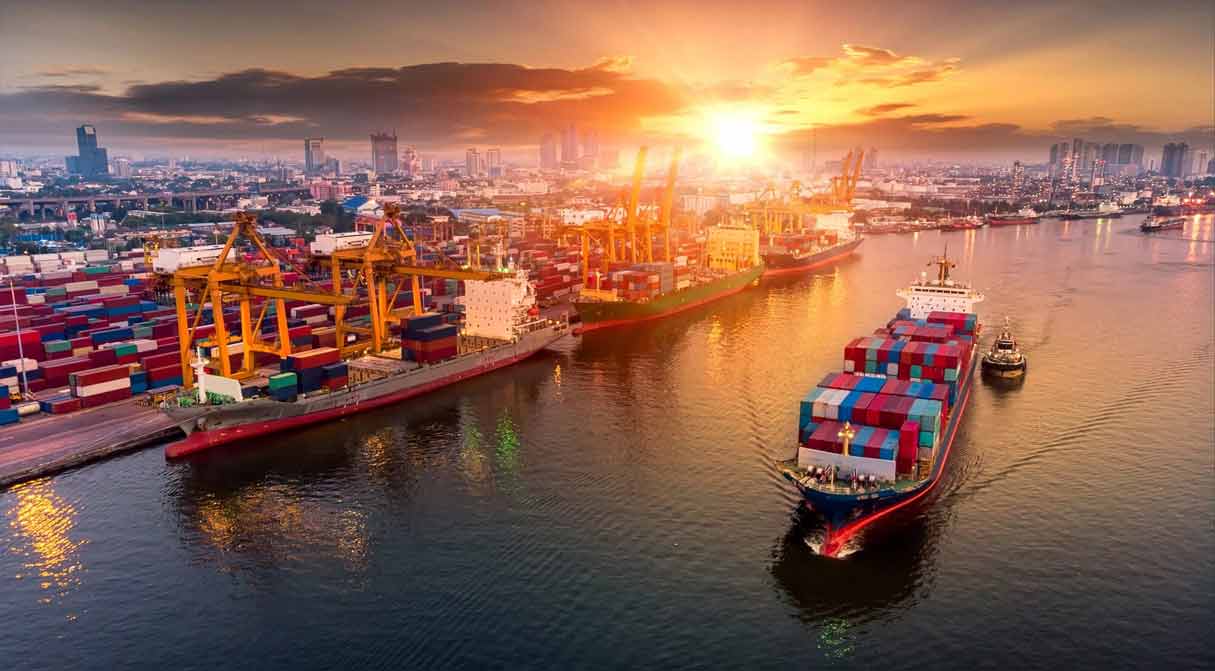
With a favorable geographical location in the center of Southeast Asia, Vietnam plays a vital role as a launching pad and base for one of the world's largest population clusters. Vietnam strategically occupies a position, holding the eastern coastline of the Indochinese Peninsula. Additionally, it shares land borders with China to the north and with Laos and Cambodia to the west. Importantly, this coastline provides direct access to the Gulf of Thailand and the South China Sea, opening up numerous opportunities and potentials in Vietnam's economic development and international relations. Vietnam has a land area of 331,114 km2. Most of the country's land area is covered by hills and mountains, while flat land accounts for about 20%. The predominant terrain in the north is highlands and the Red River Delta, while the south includes central mountains, coastal plains, and the Mekong Delta. Vietnam also boasts a beautiful coastline stretching 3,444 km, providing ideal conditions for the development of maritime transport, commerce, tourism, and making it a global maritime transportation hub.
Vietnam's capital is Hanoi, located in the northern part of the country, while Ho Chi Minh City, the largest economic center and most populous city, is in the south.
Diverse natural resources
Since offshore oil exploration began in the 1970s, Vietnam has become a net crude oil exporter. Besides oil and gas, the country also has coal reserves and hydroelectric exploitation, providing diverse energy sources.
Vietnam's mineral industry includes iron ore, tin, copper, lead, zinc, nickel, manganese, marble, titanium, tungsten, bauxite, graphite, mica, silica sand, and limestone.
Moreover, Vietnam plays a significant role in exporting agricultural products to the world market. Currently, Vietnam is the world's largest exporter of black pepper, the second-largest exporter of coffee and rice, the third-largest exporter of cashews, along with many other agricultural products.
Business-friendly environment
Vietnam has undergone a tumultuous journey from a country with low average income to achieving significant economic and social achievements after the Renovation period in 1986, along with joining international organizations such as ASEAN, WTO, and many others. Over the years, Vietnam has asserted its position as an attractive destination for investors and a promising land for foreign entrepreneurs looking to start businesses here.
Vietnam has witnessed continuous growth in business efficiency and development. Here are some key highlights to give you an idea of Vietnam's business environment in recent years:
In recent times, Vietnam has witnessed strong business trends focusing on the private sector, while also building an open and flexible business environment, attracting the interest of foreign investors to the Vietnamese market. The country has also firmly established its position as a solid foundation for the IT and manufacturing industries, thanks to competitive and reasonable labor costs.
To promote integration into the global economy, Vietnam has actively participated in a series of free trade agreements, including both multilateral and bilateral agreements. Currently, Vietnam has diplomatic relations with nearly 190 countries worldwide and has signed about 15 FTA agreements with important trading partners.
Furthermore, participation in free trade agreements has created strong incentives for foreign investors from developed countries, opening up new investment opportunities and promoting the development of the Vietnamese market.
Significant improvement in the legal environment
In addition to significant efforts to improve economic growth over the years, Vietnam has also witnessed a significant improvement in its legal framework and institutions.
Vietnam's management system has been highly praised for its open business environment, transparent investment policies, and incentives established based on the benefits for businesses.
Private business and foreign direct investment (FDI) areas, along with other sectors, have been made more favorable conditions for operating in Vietnam through these laws.
Improvements in management mechanisms related to investment and business environments have significantly contributed to Vietnam's ranking in the international community. In particular, in the World Bank's Doing Business report in 2020, Vietnam ranked 70th out of 190 economies.
Actively integrating into the global economy
Before joining the WTO in 2007, Vietnam had taken many measures to open up its market, improve its legal environment, and achieve GDP growth. Vietnam also participated in many international trade agreements such as ASEAN, AFTA, APEC, and signed agreements with the EU and the United States. Vietnam is now a member of the WTO and the CPTPP, contributing to promoting international economic integration.
Vietnam has committed to and implemented many provisions within the framework of the WTO, thereby enhancing market access for goods and services exports of other members. At the same time, implementing these commitments also plays an important role in building a transparent trade environment and creating fair conditions for both Vietnamese and international businesses. Vietnam has focused on implementing commitments regarding goods (including tariffs, quotas, and agricultural subsidies), services (including access to foreign service providers and related conditions), as well as commitments on intellectual property rights (TRIPS), investment measures (TRIMS), customs valuation, technical barriers to trade, sanitary and phytosanitary measures, import licensing conditions, anti-dumping and countervailing measures, and rules of origin.
Currently, Vietnam has established diplomatic relations with 172 countries, signed 55 bilateral investment agreements, and 58 double taxation agreements with countries and territories. Additionally, it maintains economic and trade relations with around 165 countries and territories. Vietnam is also a member of 63 international organizations and more than 650 non-governmental organizations. The policy of "multilateralization and diversification" in international relations has helped Vietnam integrate more deeply into the global and regional economy, while enhancing trade and investment cooperation with countries worldwide. More importantly, Vietnam has improved its business-friendly environment in recent years.
Safe economy and politics
In a region where political and economic fluctuations are occurring, Vietnam has benefited from the stability of its government and social structure, becoming an ideal investment destination. With 40 years of development and peace, Vietnam has become one of the most reliable investment destinations for many countries due to its stability and consistency in politics. One of the important factors that foreign direct investment (FDI) enterprises choose to invest in Vietnam is the issue of security.
Vietnam is a single-party state, with collective leadership by the General Secretary of the Communist Party, the Prime Minister, and the State President. Policies are determined every 5 years by the Party Congress and adjusted annually through meetings of the Central Executive Committee. The government and other state agencies are responsible for implementing policies. The National Assembly plays an important role in passing and amending the Constitution and laws, deciding on important national issues, and supervising the activities of state agencies.
Recently, Vietnam has been recognized as a bright spot in ASEAN thanks to its political stability, sustainable economic growth, abundant labor force, large market, and increasing per capita income. Vietnam currently has over 32,000 projects with a total value of USD 378 billion from 136 countries and territories, and while other countries are still struggling with the COVID-19 pandemic, Vietnam has quickly recovered and become a pioneer in diversifying supply chains. Therefore, foreign investors highly appreciate Vietnam's investment potential in the post-COVID-19 period.
A survey by the Japan External Trade Organization (JETRO) in February 2020 showed that over 63% of Japanese businesses in Vietnam planned to increase investment, the highest rate in the ASEAN bloc.
Government support policies
Attracting foreign direct investment (FDI) always plays an important role in Vietnam's foreign economic activities. Our country has many advantages compared to other countries and a strong investment environment, but we continue to strive to become more attractive to foreign investors through strong innovation of the investment and business environment, recognizing that the FDI sector is an important part of the economy - necessary for restructuring the economy and enhancing national competitiveness.
The Vietnamese government is continuing to revitalize its investment and business environment through three strategic breakthroughs:
Vietnam considers the success of FDI enterprises as its own success. Therefore, the government is committed to ensuring a stable political and social environment, protecting the legitimate rights and interests of investors, and creating favorable conditions for domestic FDI enterprises.
In the medium and long term, Vietnam will continue to strive to attract and efficiently utilize FDI capital inflows to promote socio-economic development. Our country will aim for "high-quality" FDI inflows, focusing on projects that utilize advanced technology, are environmentally friendly, and sustainably utilize natural resources. Additionally, Vietnam will target projects with competitive products – those that can be part of the global production network and value chain.
Among all the key tasks, maintaining macroeconomic stability while controlling inflation is crucial. The government has called on all state agencies, people's committees, and organizations nationwide to make high-level efforts to fulfill their assigned tasks. At the same time, the government has also tasked the State Bank of Vietnam to closely coordinate with central and local ministries, branches, and agencies to implement proactive fiscal and monetary policies to control inflation and stabilize macroeconomic conditions for Vietnam to achieve sustainable economic growth. Especially, as Vietnam lifts social distancing measures and strives to recover the economy, the government has issued Resolution 84/NQ-CP, providing some incentives for businesses affected by the pandemic. The resolution includes reducing certain fees and loosening various regulations related to trade, industry, and foreign employees.
Achieve Realty VN is currently distributing real estate projects in the new Thu Thiem urban area. If you need more information, please get in touch with the address:
Hotline: +8486 888 2539
Email: sales@achievereal.com