08/06/2026
"Should I invest in Thu Thiem now, or wait until the Metro is fully operational for lower prices?" — Real-world insights from actual market data.
Many expat investors looking at the upcoming Thu Thiem - Long Thanh Metro line (slated to break ground before July 2, 2026) often adopt a wait-and-see approach. They assume that once construction concludes and supply increases, prices will naturally cool down.
While this logic seems intuitive, the reality of high-end transit markets entirely contradicts it. At Achieve Realty VN, we have witnessed this firsthand across dozens of actual transactions in this prime district.
As infrastructure nears completion, prices do not fall; instead, they establish a new, highly stable baseline—completely detached from typical speculative real estate waves.
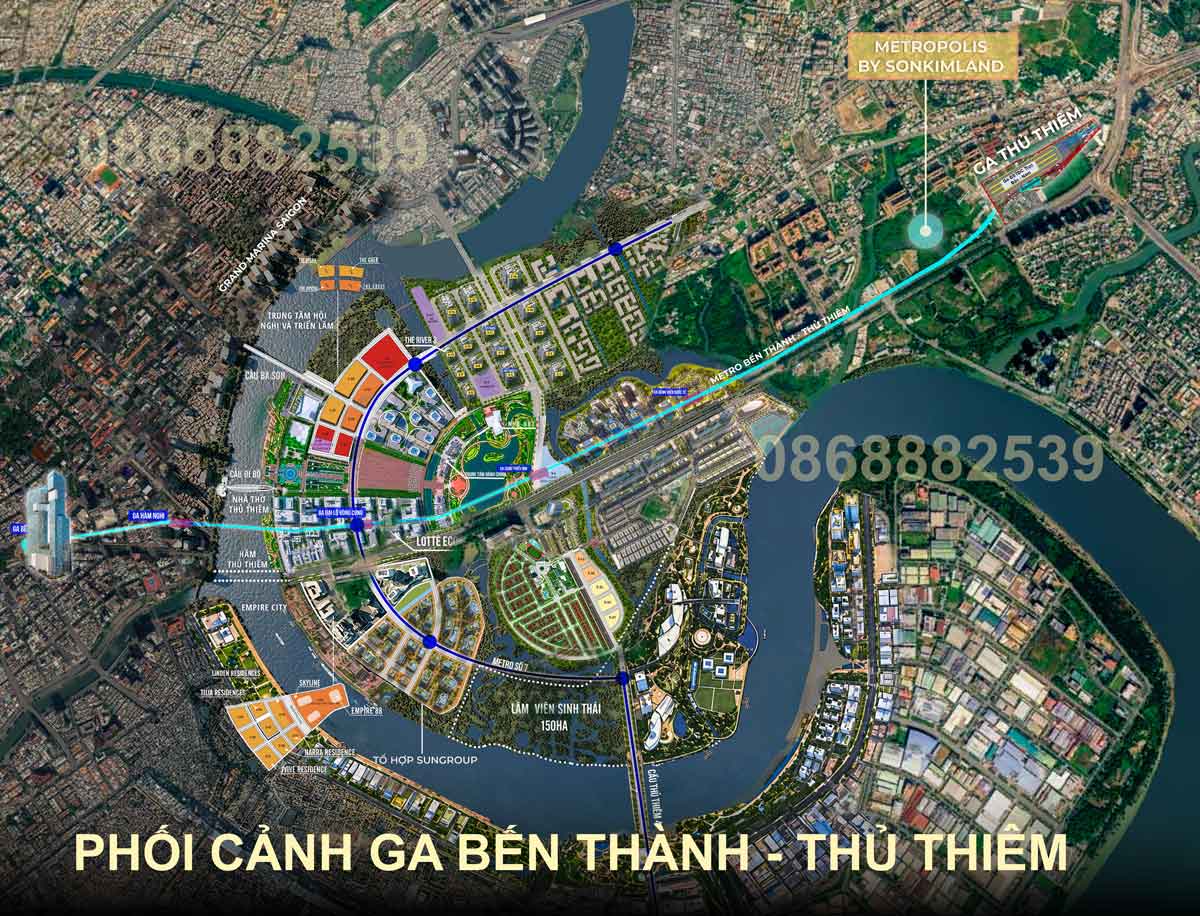 Figure 1: Master plan for Transit-Oriented Development (TOD) centering on Thu Thiem's financial core in 2026.
2026 marks the early yet highly powerful phase of Transit-Oriented Development (TOD) in Ho Chi Minh City. Unlike mature regional markets like Singapore or Hong Kong, TOD in HCMC's Eastern District represents the first-ever large-scale, systematically planned implementation of its kind.
At the center of this network, Thu Thiem acts as the terminal hub for Metro Line 2 and the cornerstone of the upcoming International Financial Center (IFC). As foreign direct investment continues to pour into Vietnam, a wave of multinational executives, financial professionals, and expats is flowing in, generating massive housing demand. High-net-worth individuals do not select properties based on "cheap entry prices"; they prioritize practical utility: minimizing commute times, proximity to key business districts, and international living standards.
To answer the question, "How will prices fluctuate once the Metro is fully operational?", we can analyze historical data from HCMC's newly operating Metro Line 1 alongside reputable market research reports:
Represents the price appreciation recorded for residential projects along Metro Line 1 between 2015 and 2023. Prime-location projects even saw valuations double once the transit network was officially connected.
Average annual price growth per square meter for properties near metro stations post-operation, translating to a compounding growth rate of roughly 8% per annum.
*Note: Markets always price in future expectations early. Early buyers capture this valuation gap before the infrastructure is physically finalized.
 Figure 2: Architectural rendering and actual construction progress of Thu Thiem's prime TOD transit network.
This is the core thesis of our analysis. Two structural factors drive this non-traditional market trend:
Unlike speculative "land fever" waves driven by quick-flip traders who dump assets and trigger price crashes, a TOD model establishes structural, ongoing demand. Assets shift from speculative valuation to stable, yield-generating core assets supported by:
Historical market data indicates a profound structural shift in supply. For instance, looking at the evolution of apartment market supply:
There is absolutely no oversupply of luxury units in prime TOD zones that could trigger a price correction. Instead, values are driven upward by intense competition among real, high-net-worth buyers.
Navigating the ultra-luxury real estate market requires strategic caution and a long-term perspective. At Achieve Realty VN, we believe in radical transparency. Here are the core risks international investors must evaluate:
While breaking ground before July 2026 represents a major political commitment, actual construction timelines can stretch due to land clearance, regulatory procedures, or capital allocation. Investors should not overleverage based strictly on a rigid "Metro completion by 2030" timeline.
Should macroeconomic conditions or domestic policy changes slow down FDI disbursement, the rate of foreign experts relocating to Thu Thiem might soften. This would temporarily pressure occupancy rates and projected rental yields.
Luxury developments in Thu Thiem (such as Empire City, The Metropole, Grand Marina, etc.) carry premium management fees ranging from 25,000 to 35,000 VND / sqm / month. Over a 5-to-10-year holding period, these costs accumulate. You must model whether the projected ~8% annual capital appreciation comfortably covers these holding costs.
Should you acquire a Thu Thiem residence today or focus on surrounding districts with lower entry costs? The decision hinges directly on your financial goals:
| Investment Objective | Recommended Area | Underlying Rationale |
|---|---|---|
| Long-term Living & Asset Preservation (5-10 Years) | Thu Thiem TOD | Highly resilient rental cash flow and exceptional liquidity for luxury assets due to an irreplaceable prime location. |
| Short-term Speculation (1-2 Years) | Nha Be, Can Gio, Long Thanh | Lower entry price points and potential for faster percentage-based capital gains driven by initial master plan announcements. |
| Ultra-Long-term Wealth Preservation (10+ Years) | Thu Thiem | Unmatched macroeconomic stability, poised to serve as the future financial beating heart of Southeast Asia. |
 Figure 3: Chart showing the rental yield delta between properties near Metro lines and standard city apartments.
Robust rental yields act as a safety net, shielding premium property values from broader market corrections. Let's analyze a real-world case study for a standard 2-bedroom luxury residence in Thu Thiem today:
| Layout: | 2-Bedroom (The Metropole / Empire City) |
| Investment Value: | 25 Billion VND (~$1,000,000 USD) |
| Average Monthly Rent: | 45 Million VND (~$1,800 USD) |
| Annual Rental Income: | 540 Million VND (~$21,600 USD) |
*Market Comparison: A comparable premium 2BR in older, established districts (like Phu My Hung) typically rents for 25-30 Million VND/month. Properties near prime TOD stations command a consistent 20% to 40% premium due to unmatched transit convenience.
To make an informed decision aligned with your personal financial goals, review the investor profile checklist below: