06/02/2025
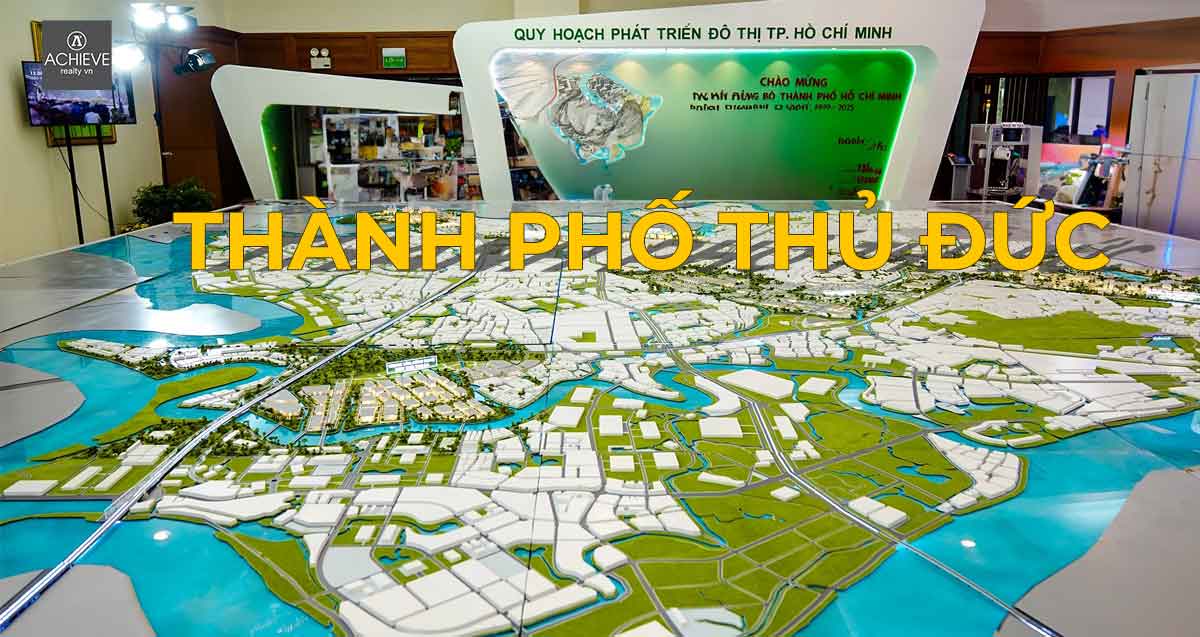
Thu Duc City, established in 2020 through the merger of three eastern districts of Ho Chi Minh City, is being planned as a new economic, cultural, and educational hub. According to the master plan for 2040, Thu Duc is divided into nine development zones, each with distinct functions and characteristics, aimed at fostering comprehensive and sustainable growth for the area. Notably, the Thu Thiem area in Zone 1 is designated to become a major financial and commercial center of the city.
In this article, Achieve Realty VN will introduce the nine development zones of Thu Duc City, highlighting how this strategic planning is driving the rapid growth of the real estate market in Ho Chi Minh City's eastern region.
Zone 1: Financial and Commercial Service Center
Comprising the wards of Thu Thiem, An Loi Dong, Thao Dien, and parts of An Khanh and An Phu, this zone is bounded by Mai Chi Tho Street, the Saigon River, and Rach Chiec. Covering an area of approximately 1,808 hectares, it is planned as the financial, commercial, and cultural hub of Ho Chi Minh City, with international significance. This area also serves as a spatial connector between Thu Duc City and the existing downtown of Ho Chi Minh City.
Notably, the new Thu Thiem urban area within this zone is set to become the "East City" of Ho Chi Minh City, attracting global attention as a premier financial and business district.

Zone 2: Administrative Center and Northern Gateway
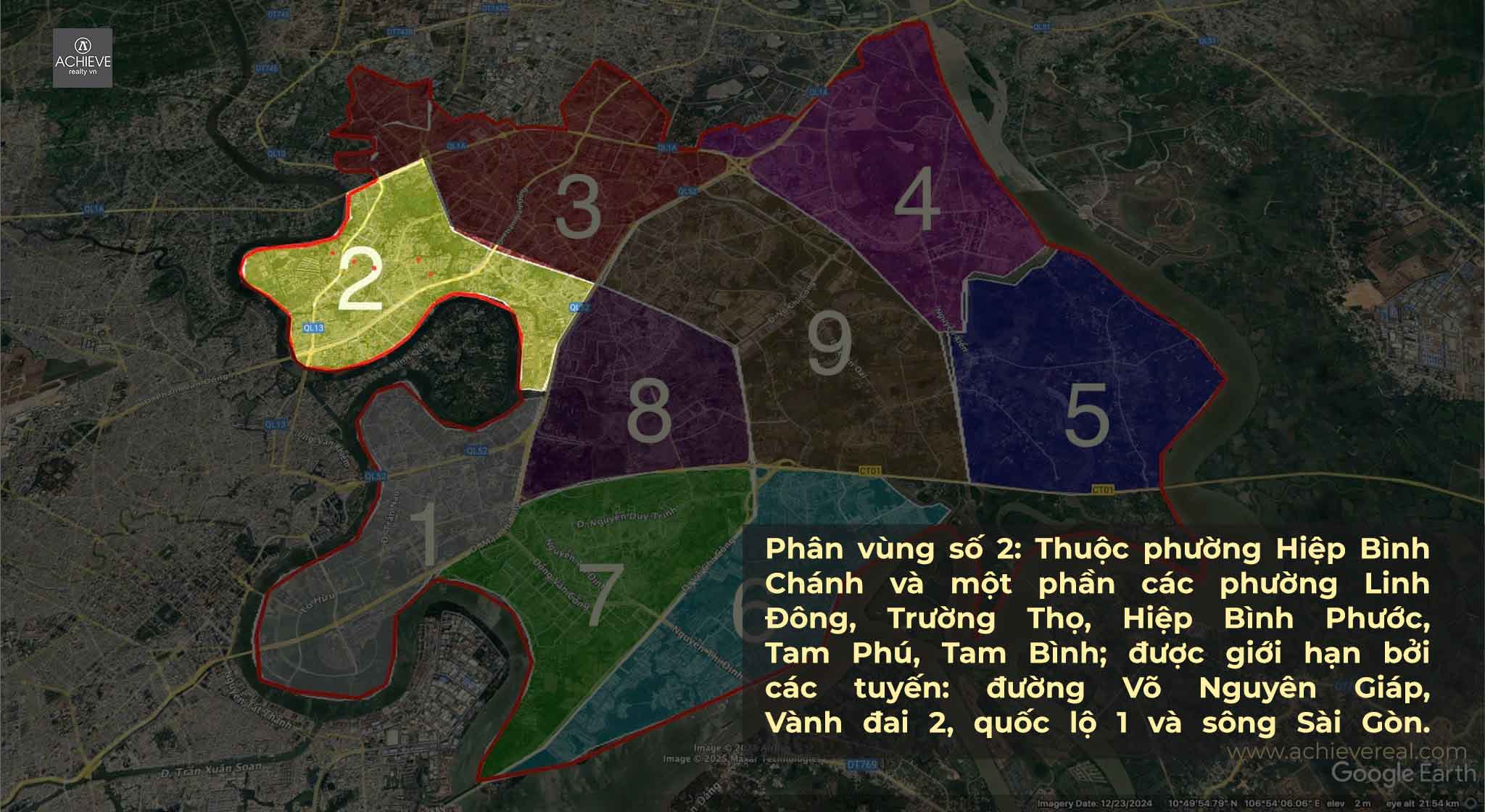
This zone includes Hiep Binh Chanh Ward and parts of Linh Dong, Truong Tho, Hiep Binh Phuoc, Tam Phu, and Tam Binh Wards. It is bounded by Vo Nguyen Giap Street, Ring Road 2, National Highway 1, and the Saigon River.
Planned as the new central area of Thu Duc City, this zone integrates administrative, cultural, and commercial service centers while also serving as the northern gateway of the city. Additionally, it features a tourist river port in Truong Tho and functions as a key hub for stormwater drainage management and regulation.
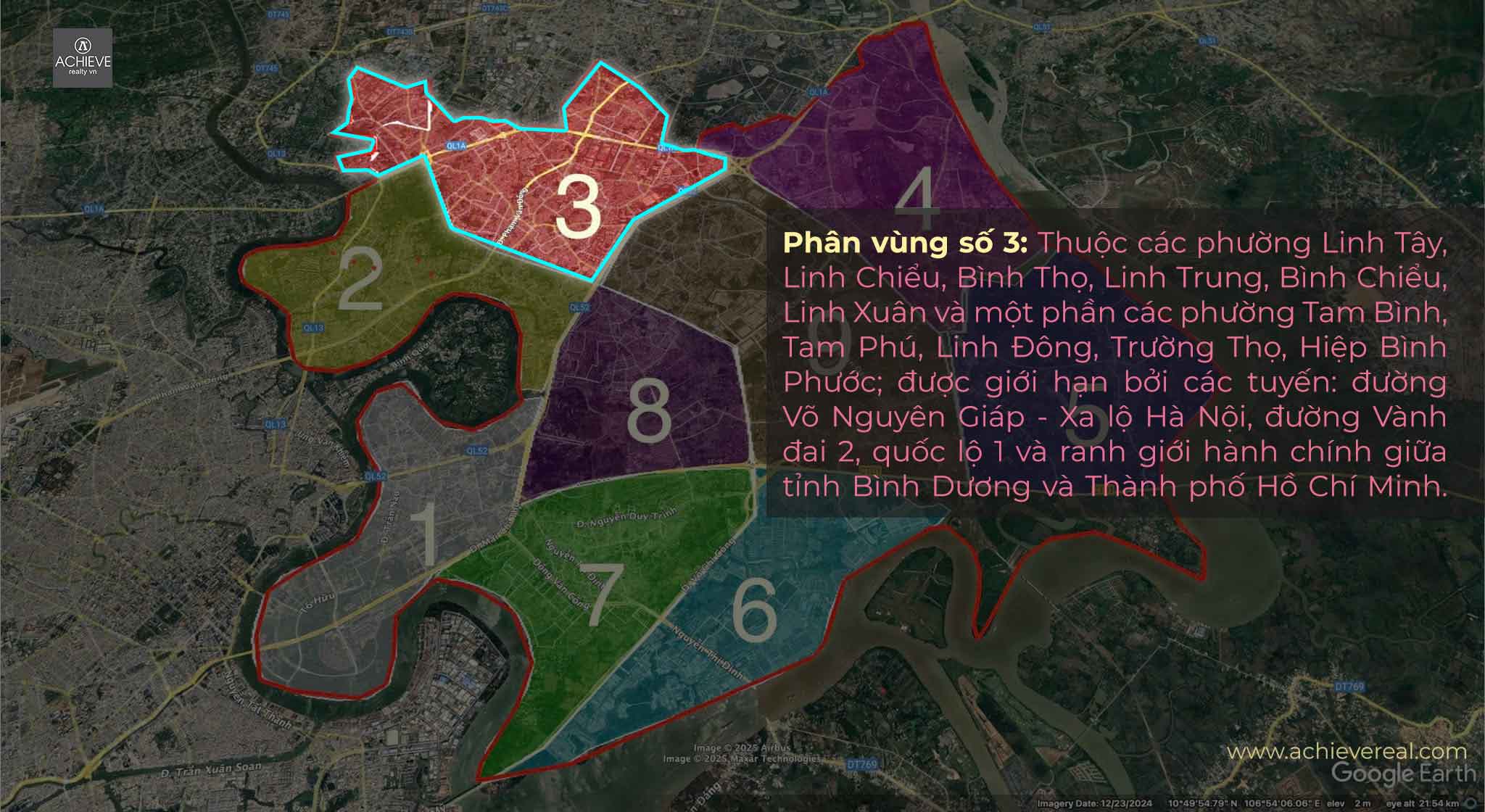
Zone 3: Existing Urban Area and Education Hub
This zone includes the wards of Linh Tay, Linh Chieu, Binh Tho, Linh Trung, Binh Chieu, Linh Xuan, and parts of Tam Binh, Tam Phu, Linh Dong, Truong Tho, and Hiep Binh Phuoc. It is bounded by Vo Nguyen Giap Street – Hanoi Highway, Ring Road 2, National Highway 1, and the boundary with Binh Duong Province.
This area is an established urban zone, closely linked to educational institutions, production facilities, and transit service centers. It plays a crucial role in supporting industrial and logistics operations, while also serving as a key education and research hub within Thu Duc City.
Zone 4: Cultural and Port-Industrial Center
This zone includes Long Binh Ward and parts of Tan Phu and Long Thanh My Wards. It is bounded by the border with Binh Duong Province, National Highway 1, the road connecting Ring Road 3 with Hanoi Highway, Tac River, and Dong Nai River.
Planned as a cultural hub with entertainment facilities for Ho Chi Minh City, this area also serves as a port-industrial and logistics service center connected to the Dong Nai River. Additionally, it acts as the eastern gateway of the city, linking Thu Duc with urban and industrial zones in Bien Hoa and Dong Nai Province.

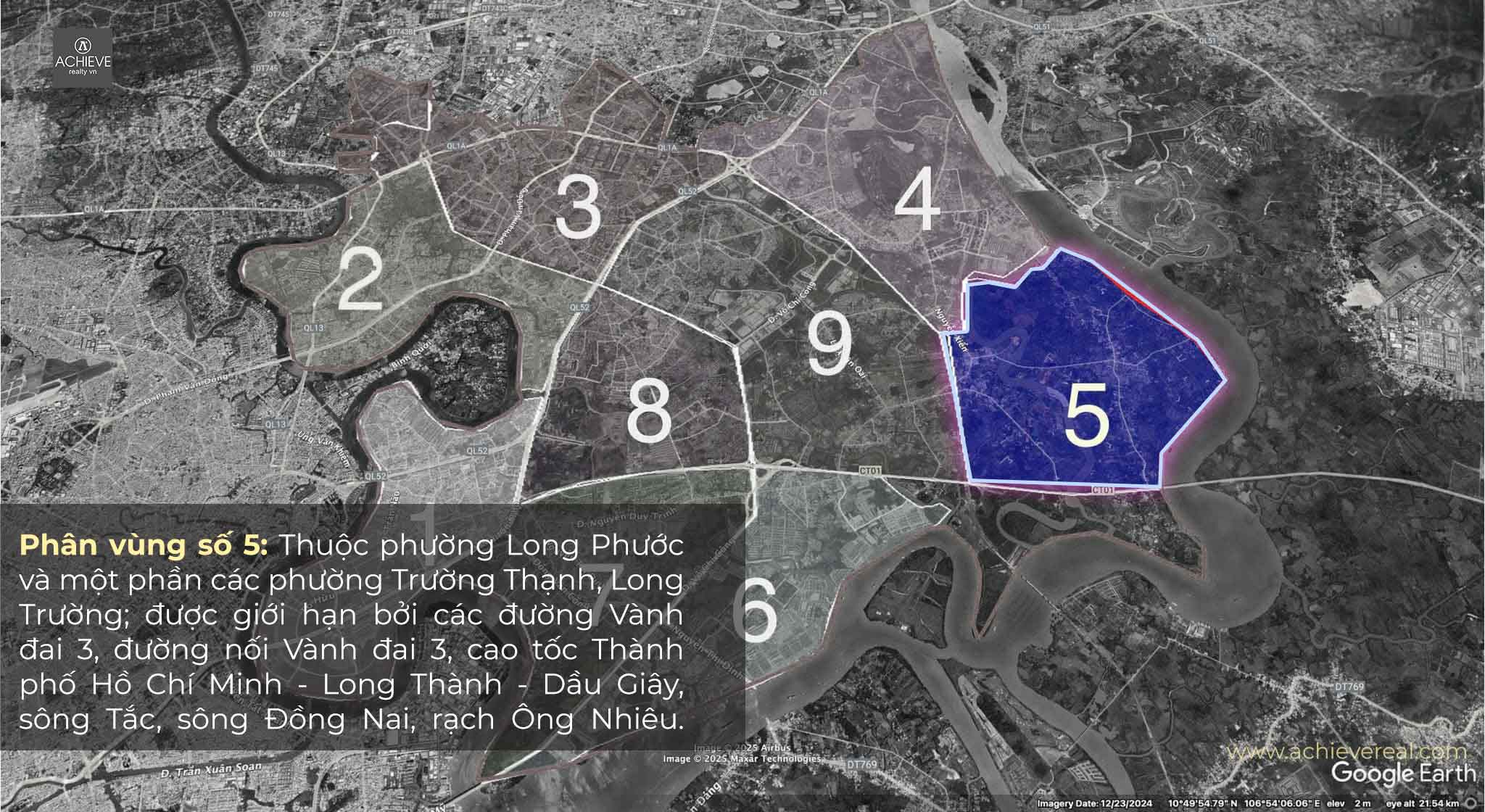
Zone 5: Innovation Hub
This zone includes Long Phuoc Ward and parts of Truong Thanh and Long Truong Wards. It is bounded by Ring Road 3, the road connecting Ring Road 3, the Ho Chi Minh City – Long Thanh – Dau Giay Expressway, Tac River, Dong Nai River, and Ong Nhieu Canal.
Designed as an innovation hub, this area focuses on high-tech applications, research, and education, fostering technological advancements and entrepreneurship. Additionally, it serves as a key gateway connecting Ho Chi Minh City to Long Thanh International Airport, strengthening regional and global connectivity.
Zone 6: Port Services and Logistics Hub
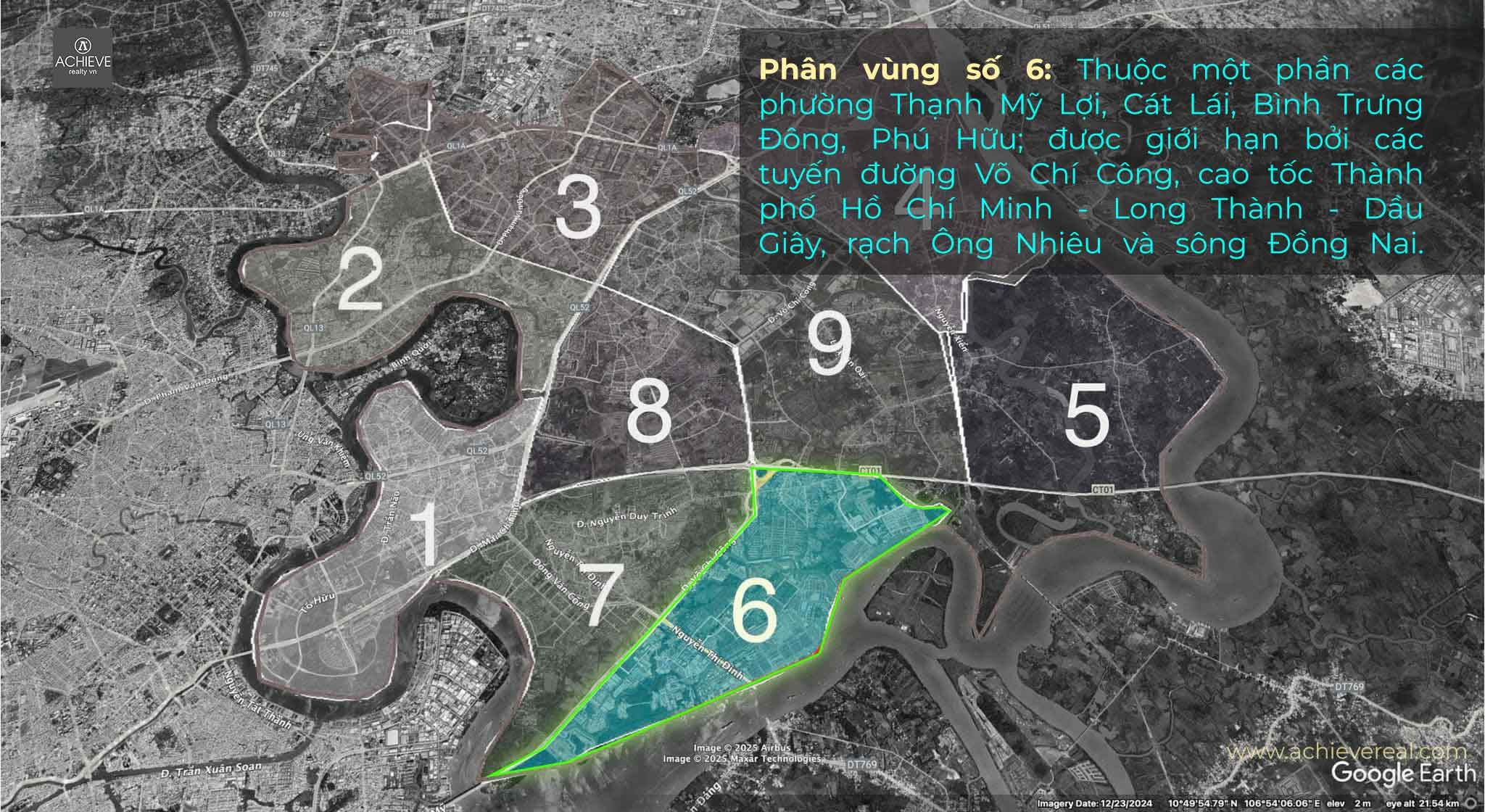
This zone includes parts of Thanh My Loi, Cat Lai, Binh Trung Dong, and Phu Huu Wards. It is bounded by Vo Chi Cong Street, the Ho Chi Minh City – Long Thanh – Dau Giay Expressway, Ong Nhieu Canal, and the Dong Nai River.
Planned as the port services, industrial, and logistics center of Ho Chi Minh City and its surrounding urban areas, this zone plays a crucial role in trade, transportation, and supply chain management, supporting both domestic and international commerce
Zone 7: Existing Center of Thu Duc
This zone includes Binh Trung Tay Ward and parts of An Khanh, An Phu, Phu Huu, Binh Trung Dong, Cat Lai, and Thanh My Loi Wards. It is bounded by Vo Chi Cong Street, the Ho Chi Minh City – Long Thanh – Dau Giay Expressway, Mai Chi Tho Street, and the Saigon River.
As the existing central area of Thu Duc, this zone plays a key role in connecting the city’s major economic drivers, including port services and the Thu Thiem financial center, enhancing both urban development and economic synergy within the city.

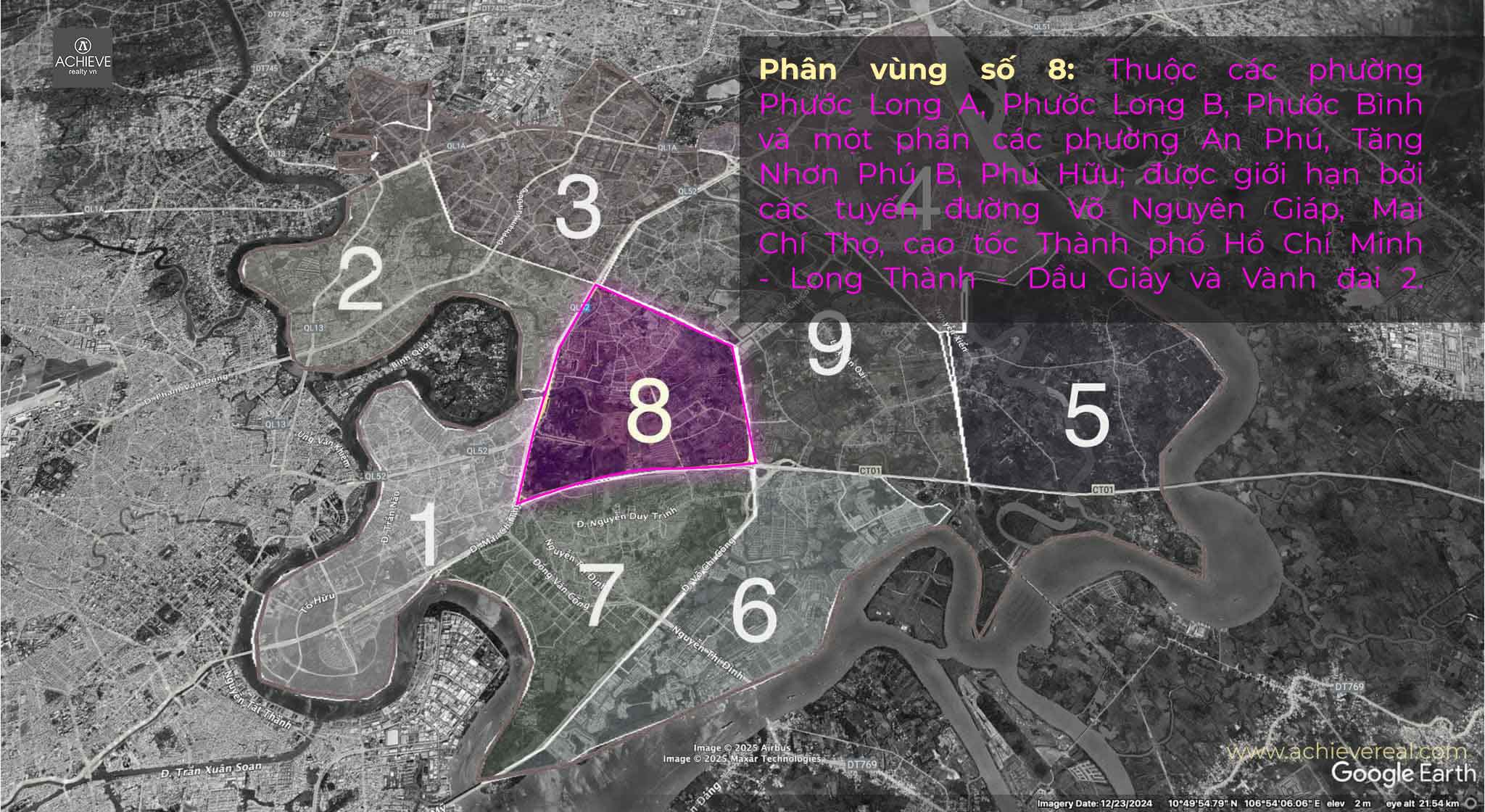
Zone 8: Sports and Cultural Center
This zone includes the wards of Phuoc Long A, Phuoc Long B, Phuoc Binh, and parts of An Phu, Tang Nhon Phu B, and Phu Huu. It is bounded by Vo Nguyen Giap Street, Mai Chi Tho Street, the Ho Chi Minh City – Long Thanh – Dau Giay Expressway, and Ring Road 2.
Planned as the sports hub of Ho Chi Minh City, this zone will feature a national-level sports complex. Additionally, it serves as a cultural and entertainment center for Thu Duc, integrating newly developed urban areas with existing residential zones to create a dynamic and vibrant living environment.
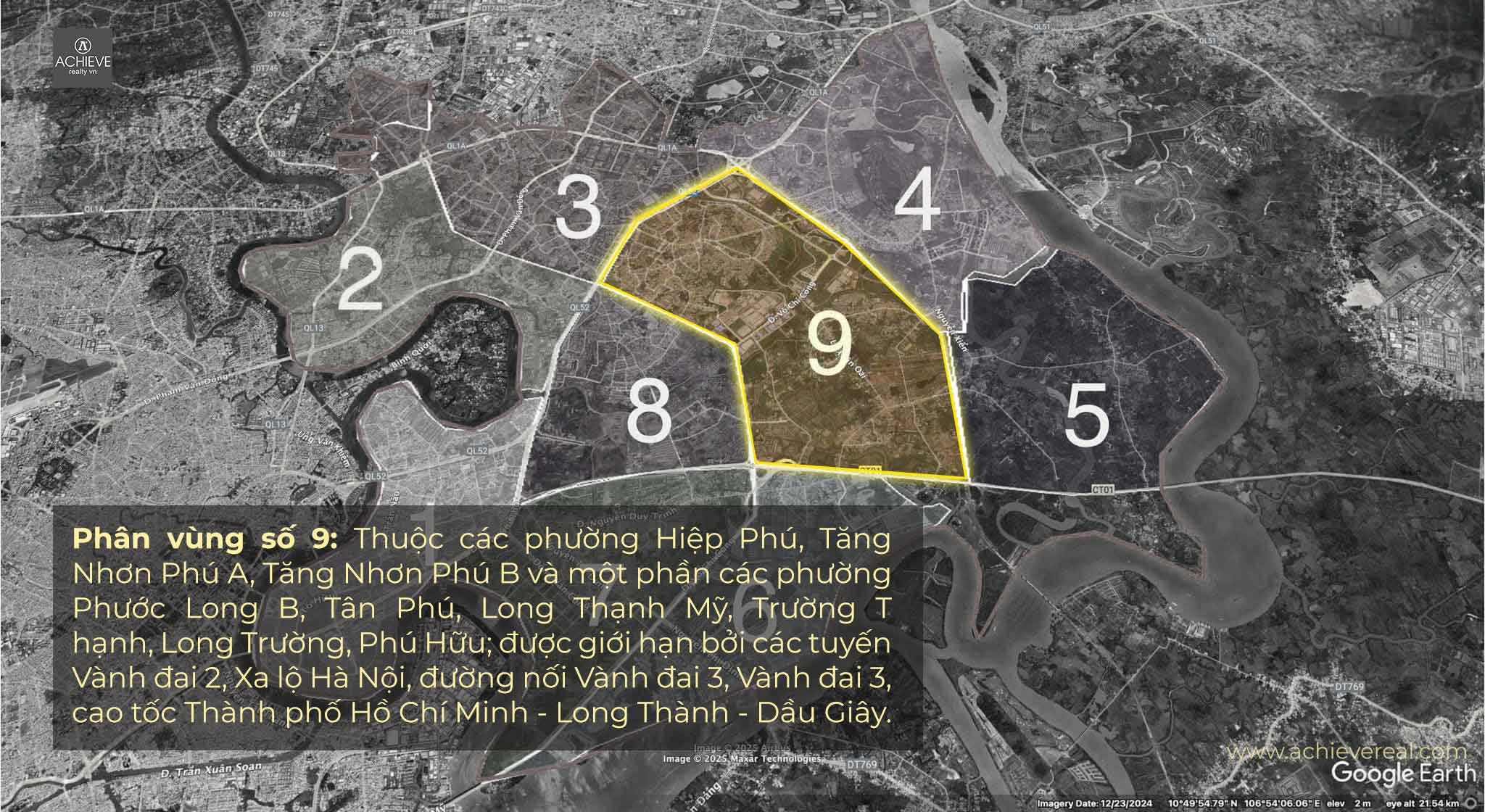
Zone 9: High-Tech Manufacturing and Innovation Center
This zone includes the wards of Hiep Phu, Tang Nhon Phu A, Tang Nhon Phu B, and parts of Phuoc Long B, Tan Phu, Long Thanh My, Truong Thanh, Long Truong, and Phu Huu. It is bounded by Ring Road 2, Hanoi Highway, the road connecting Ring Road 3, Ring Road 3, and the Ho Chi Minh City – Long Thanh – Dau Giay Expressway.
Covering an area of approximately 3,135 hectares with a projected population of 350,000 people by 2040, Zone 9 is planned to become a high-tech manufacturing and innovation hub, integrated with surrounding urban areas.
To achieve this vision, the zone will focus on the development of the Ho Chi Minh City High-Tech Park, transforming into a center for innovation and advanced technology. Its key functions include:
Additionally, priority will be given to enhancing transportation connectivity, developing urban service infrastructure, and establishing high-quality residential areas to attract talent and meet the needs of workers in the region.
The division of Thu Duc City into nine specialized development zones has brought positive economic, social, and real estate impacts. Each zone is planned with a specific purpose, such as financial and commercial centers, cultural hubs, high-tech industries, and logistics services, contributing to diverse and sustainable economic growth. This development not only creates job opportunities and improves the quality of life for residents but also attracts skilled professionals and experts from both Vietnam and abroad to live and work in the city.
For the real estate market, this master plan has significantly increased property values across Thu Duc City. Areas with well-developed infrastructure, including efficient transportation networks, expanded roads, and major infrastructure projects, have become prime investment destinations. As a result, real estate prices have risen, making properties more attractive to both buyers and investors.
However, to ensure sustainable growth, strict management is required in implementing the master plan. It is essential to balance economic development with environmental protection, while maintaining a high quality of life for residents.